Be yourself; Everyone else is already taken.
— Oscar Wilde.
This is the first post on my new blog. I’m just getting this new blog going, so stay tuned for more. Subscribe below to get notified when I post new updates.
Be yourself; Everyone else is already taken.
— Oscar Wilde.
This is the first post on my new blog. I’m just getting this new blog going, so stay tuned for more. Subscribe below to get notified when I post new updates.
April 19th, 2020
I hope everyone is doing well and has had a great week! I cannot believe that it is already April 19th!! To me, March felt like it lasted years, while I feel like I just blinked and we are halfway through April! Anyhow, for this weeks blog I have decided to discuss Stelara, a type of monoclonal antibody drug approved by the FDA. Now, you are probably wondering what that is, and how I chose this topic. For the “what” I will discuss in the post below. For the “how”, I chose this topic when I was watching TV. One of the commercials was for a drug called Stelara, a commercial l have maybe seen 100 times because it always plays. I was really interested into what this drug actually was that I had seen over and over again. When I googled it, I saw that it was a monoclonal antibody drug, approved by the FDA. I decided to choose this topic because we are going to be discussing monoclonal antibodies in my Microbiology class next week and I had to read about them in my textbook.
First, let me explain what the heck a human monoclonal antibody is. As I learned from my microbiology textbook, monoclonal antibodies are special antibodies that are developed in a laboratory. First, scientist will immunize an animal (typically a mouse or rat) to a specific disease. Then, they will harvest the specific B-cells produced in response the the specific disease the animal was immunized against. Next, the scientist will combine these short-living B-cells with myeloma cells. Myeloma cells are plasma cells which will continuously divide (malignant/cancerous) in a media. Additionally, a salient enzyme will be removed from these myeloma cells, which will inhibit these cells to grow in the presence of a drug called aminopterin. Following, the scientist will then mix the harvested b-cells from the animal with the altered myeloma cells in a medium that contains the drug aminopterin.
By adding the drug aminopterin it ensures that only the fusion products from the b-cell and altered myeloma cells will live and continue to divide/ proliferate. The products of the fusion are called hybridoma cells. These cells have inherited critical components from both of its “parent cells”. From the b-cell, it has the ability to make the specific antibodies (in response to the antigen it was immunized for) and from the myeloma cells it has the ability to continuously divide in the media. These cells are then harvested by the scientist and used for various reasons, one being for antibody therapy to treat various diseases.
Ustekinumab, otherwise known as Stelara, is one of the FDA approved monoclonal antibody therapy drugs. Stelara is used to treat the following: Crohn’s disease, moderate or severe psoriasis, active psoriatic arthritis, and moderately to severely active ulcerative colitis.
This drug is the only FDA approved drug that targets IL-12 and IL-23, which are two types of interleukins, which are a class of cytokines, that are released by the body’s immune system in response to pathogens. Specifically, these two cytokines are released by activated macrophages and dendritic cells. IL-12 is mainly required for antimicrobial responses to intracellular pathogens (pathogens that replicate inside cells). The specific action of IL-23 is still being explored, but it is thought to be salient in the recruitment and activation of a range of inflammatory cells that is required for the induction of chronic inflammation and granuloma formation. So, these two cytokine are pro-inflammatory, meaning they help cause inflammatory immune system. Additionally, they are apart of the body’s innate immune system.
Specifically these cytokines bind to a specific protein (p40 protein subunit) on IL-12 and IL-23. By binding to them, this drug has inhibited their ability to activate their specific T-cells. Normally these would both activate their specific T-cells and cause them to differentiate into specific type of T-helper cells to elicit an immune response. IL-12 causes T-helper cells to differentiate into T-helper 1 and IL-23 causes T-helper cells to differentiate into T-helper 17. This action of inhibition is helpful for the diseases this drug treats. For example, both psoriasis and active psoriatic arthritis, are thought to occur due to an increase in the production of T-cells, which then cause skin cells to grow at a rapid rate. This rapid growth of the skin cells is what causes the skin plaques of psoriasis to occur. Moreover, is thought by researchers/scientists that the increase in production of both IL-12 and IL-23 lead to the GI inflammation in both Crohn’s disease and ulcerative colitis. For these reasons, the action of Stelara helps to treat these diseases by inhibiting the action of IL-12 and IL-23.
Like with most drugs/treatments, there are side effects. To me, it is the most comical part of all drug commercials for drugs like Stelara. It seems like half of the commercial is spent talking about possible side-effects that could occur and the other diseases that it makes you susceptible for.
The common side-effects of Stelara include:
It is also important to note that taking this drug may lower one’s ability to fight off infections and thus increase your risk of getting infections, which may include:
Taking a drug like Stelara can causes these infections due to its mechanism of action. By taking Stelara, it will inhibit part of your body’s immune system (IL-12 and IL-23). By lowering your immune system you will obviously be more likely to contract other infections, which is why these people are often considered immunocompromised and take precaution. These two cytokines are very salient in one’s ability to fight off bacteria and to suppress tumors, which is while these signs and symptoms and other infections can occur. When you lower your immune system, it will make it easier for pathogens to grow to infectious amounts. When uninhibited, IL-12 acts to help the immune system respond to intracellular bacteria and viruses, which is why one is more susceptible to contracting these types of infections when on Stelara. When uninhibited, IL-23 acts to help the immune system fight off extracellular pathogens and to help fight off self-cells that are multiplying abnormally (cancer cells).
It is for these reasons it is very salient for people taking Stelara to constantly monitor how they feel and report any changes to their physician, as some of these side-effects and risks are fatal.
Thank you for reading this weeks blog! I hope you enjoyed it as much as I did. I think monoclonal antibody drugs, like Stelara, are very interesting. It shows how far modern science has come and where it could continue to go! It makes me wonder if they could use this type of treatment for people with the coronavirus. Thank you again, and look out for next weeks blog post!
Sunday, April 12th
Happy Easter Sunday!! I hope you have all had a great week and have stayed safe and healthy. This week I have decided to focus on COVID-19 again. More and more recently I have read and heard on the news about an antibody responses for the virus and it was very interesting to me. In my Microbiology class we have been discussing antibodies, so I thought this topic would be perfect for this week.
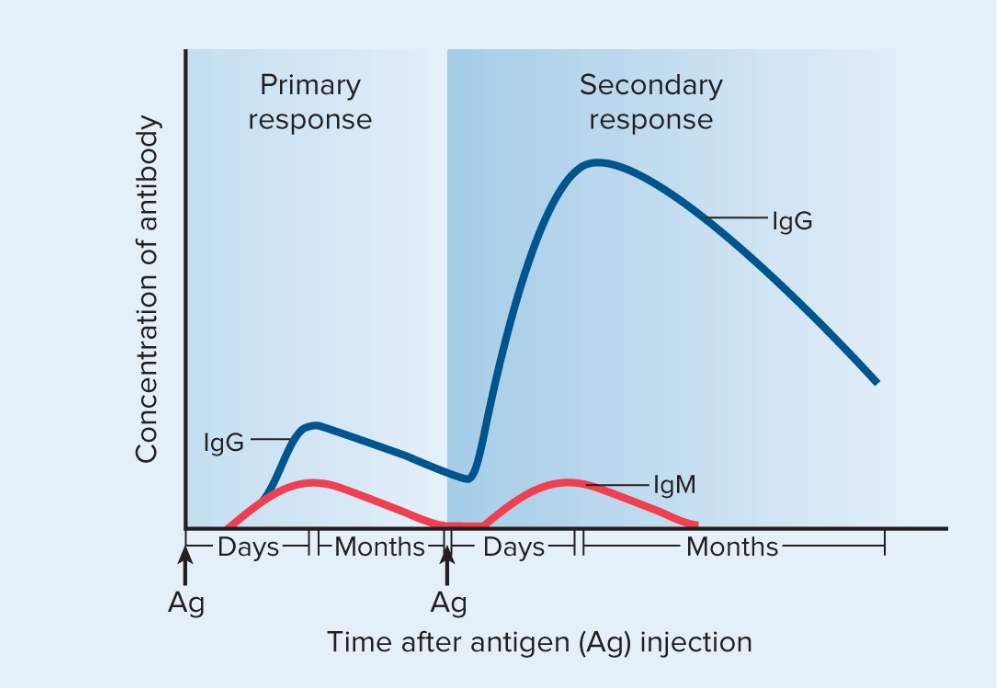
Before I dive into the antibody responses for COVID-19, it is important that I explain what an antibody response is. An antibody is a protein produced by your body’s immune system in response to a specific pathogen. After they are produced they circulate the body looking for the pathogen they are specific for. It takes about two weeks (10 to 14 days) for the immune system to secrete a significant number of antibodies to be able to effectively inhibit the pathogen and to kill it. Further, the antibodies will last in the blood after the pathogen is eradicated. There are many actions which antibodies can do to kill pathogen or the infected human cell. There are five classes of antibodies, which include: IgM, IgD, IgG, IgA, and IgE. These antibodies differ in their immune response effects, as well the differ in when they are produced throughout a primary and secondary immune response.
The two important ones pertaining to the coronavirus are IgG and IgM. The IgM antibody is the “fast reaction” antibody. This antibody is produced relatively quickly by the body in order to activate an immune response the invading pathogen (in this case the coronavirus). On the other hand, the IgG antibody takes longer to get activated, but is more powerful in its attack. This antibody is better able to target the pathogen and keeps the body safe afterward. The following is a graph which highlights the concentrations of IgG and IgM antibodies through and after a primary and secondary infection.
At the beginning of April, the FDA approved the first antibody test in the United States, under the biotech company Cellex. The type of test which looks at one’s antibodies is called a serological test. With this type of test the medical professional will draw blood from the person’s veins where it will then be analyzed in a lab. Specifically, the type and concentrations of antibodies will be assessed. With coronavirus, the concentrations of IgM and IgG are observed.
When analyzing the patient’s blood, if the medical profession finds only IgM antibodies in their blood, it suggests that they are within the early days of infection with the virus. As stated above, IgM is the antibody produced first as a means to jump start the immune system until the more effective antibodies are produced. So when this antibody is found in significant concentrations, without others, it shows that the immune system has not had enough time to produce the more effective antibodies, like IgG. The presence of both IgM and IgG antibody will reflect that the person is either in the later stages of fighting the infection or beginning stages of recovery. As the immune response progresses, it will start to make less IgM and more of the efficient antibodies, like IgG. IgG levels will still remain high even after the infection has been cleared from the body. If the blood sample has primarily IgG titers, then that person has recovered from the virus, and now has some protection to it. It is with these results that they are unable to infect people, as their immune system has effective eradicated the virus, and thus they are no longer infectious.
This antibody tests created by Cellex is an amazing advancement in our efforts to help find treatment and a cure for the coronavirus. First off, you get the test results within 15 to 20 minutes after they draw your blood. Further, this test will shed a lot more light on how many people have mild/ asymptomatic infections from this virus. This will help researchers and scientist get a better understanding of COVID-19 and the affect on our population.
Prior to this the diagnostic test used widely was the PCR test. With this test you take a swab and stick it up their nasal cavity all the way to their nasopharynx . This sample will get sent to a lab, where it is analyzed. The medical professional will be looking for RNA fragments from the coronavirus. This test can only conclude if someone is currently infected with the virus. I have seen videos of people receiving these test, and boy do they look painful! Additionally, these test typically take days to figure out the results.
It is important to have antibody tests because unlike the nasal swap (PCR) test, the antibody test will tell someone if they have or have had coronavirus, and if they are recovered. This will help researchers and scientist have a better understanding of how many people have had this virus. It will also give them better data on people with mild and asymptomatic cases. I think that it is important to know this knowledge because the more we know this the better and more accurate our data can be, which will only help them in their efforts for a cure.
—–
I hope you all enjoyed this weeks blog! I think that it is very salient to understand the body’s antibody response to this virus, because it will help in the efforts for creating an effective vaccine. To create an effective vaccine, it will need to mimic the body’s natural response to the virus in order to create a proper immune response to it. I hope the FDA starts approving more antibody tests so that we can have a better and more efficient system of testing people. I hope this will happen so we can get back to some semblance of “normal” as soon as possible. But, more importantly I hope these tests will give researchers and scientist more knowledge about this virus so that they can make an effective vaccine and treatments. I hope you all have a great week and look out for next weeks blog!
I hope you are all doing well and staying safe. I have decided to do something a little different this week for my blog post. With everything going on, I have decided to do a blog post about my life during these times. Many people have been interested about what it is like to be a college student during this time, so I thought I would write about my experience.
Typically during spring break students are getting a much needed break during their second semester. Many students will either go home for a nice refreshing visit to their families, stay on campus to relax, or go on vacation all around the country and the world. However this year spring break looked a little different for most of us students. Over my spring break, which was originally suppose to only be from March 6th through the 15th, I got an email from UNC about how we would now do classes remotely and that I was not to return to UNC unless necessary. To be honest, I wasn’t completely shocked by this e-mail. The week before spring break there had been talk at UNC by many students and professors about how we might have to go to online classes for a couple weeks after spring break in order to control the spread of the virus. My friends and I all joked about how awesome that would be, because then we could have a nice couple of weeks away form UNC to have home cooked meals, see our friends from home and not have to change out of our pjs to go to class. Little did I know that when I hugged my college friends goodbye, I wouldn’t be seeing them till the next school year.
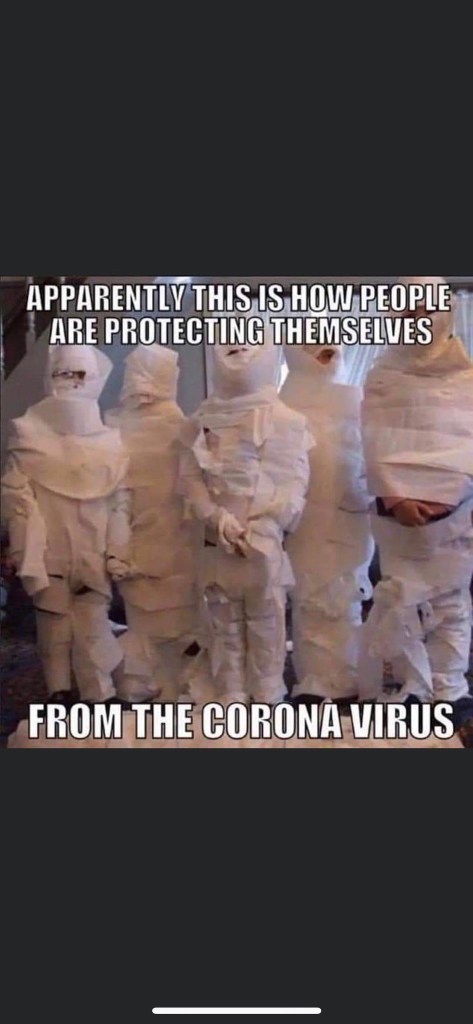
Thankfully, I live in Raleigh, NC, which is only 30 to 40 minutes from Chapel Hill, so I was able to return to my off campus apartment to retrieve some things. My mom asked if I wanted to move everything out, but I was unsure because at that point I still had hope that we might return to campus. However, that hope would soon be crushed as the days progressed and virus continued to wreaked havoc all over the world. Sunday March, 15th was a lot different than I had envisioned it. Originally, I was suppose to be heading back to campus getting read to dive back into the semester and having a nice dinner with my friends. However, I ended up being home, and running to multiple stores in order to find a pack of toilet paper. It just makes no sense to me why so many people are buying all this toilet paper. How does a respiratory virus relate to the need to buy all the toilet paper in sight?!? Here is a meme which sums it up for me:
The University decided to extend our spring break by a week in order to give students time to adjust to this “new normal” and to get professors ready to lecture to their computer screen, rather than to a classroom full of students. In theory this kind of sounded nice. Being able to wake up 10 minutes before class to roll out of bed, brush my hair and log on to my computer sounded amazing. It sounded way better than waking up an hour before class to get ready and hike across campus. However, I didn’t realize how much I would miss the ability to walk around campus and see how it changed from the cool winter to the warm spring.
As that week progressed, more and more of life as I used to know would change into something that not even a movie could have made up. Slowly more and more stuff became restricted. I think what is being done is necessary, but it is hard and seems surreal This “new normal” is very isolating and bleak. My weeks now consist to listening to pre-recorded lectures, listening to lectures on zoom, taking many of walks with my family and dog, waiting in line to get into the grocery store, and finding any activity to at my home to keep me occupied. Initially, I was a little depressed, something I was not anticipating. During my second week of spring break I had a lot of free time to sit and wallow. I was feeling very isolated from my friends, I was sad I was not back at UNC, and the news of the pandemic was stressful. However, once school began online it gave me more of a schedule and helped to get me out of the funk. Additionally, my twin sister who was studying abroad in Australia returned home, which was stressful because we had to quarantine her, but a relief as we are very close and have a lot of fun together.
Online classes on zoom are not the best, to be frank. It is not the fault of the professors or any administration at UNC, or anyone for that matter. I never realized how much I actually enjoyed my walks through campus to get through class, talking with my friends before (during) and after class, and actually seeing my teacher face to face during lecture. I did not realize how much of a privilege it was to do these things. It is a lot harder for me to focus and learn when I do not have my professor in front of me. This whole experience is making me take nothing for granted. I will not take for granted being able to walk into a grocery store, sit at a restaurant, or being able to hug my grandparents. Additionally, I feel as if my learning is being directly impacted. For example, I am in a Microbiology lab, but now instead of performing experience hands on, we have to just read the lab manual and take quizzes. Further, some of my hands on group projects have changed in order to accommodate the new remote learning. You never realize how good you have it, until it’s gone.
Initially, I was very overwhelmed with all that changed and with all that was going on. I would watch the news all the time and would think about all that was suppose to be happening, but couldn’t because of the pandemic. However, that attitude caused me to be depressed and anxious. I had to shift my mindset, to one of hope and positivity. I started to realize how lucky I was. I am able to be home with my loving family. I am able to still get an educated, though it not be the same, it is better than nothing. I am lucky to be safe and healthy and not in a “hotspot”. Once I started thinking more like this I became a lot less stressed and not depressed anymore. I started to be productive during this time and not just sit around and worry.
If we all think more positively, and follow the rules the better this will be. We need to stay home unless necessary and when we are out we need to practice social distancing and be as clean as possible. We all need to work together as a society to flatten the curve and to get through this pandemic. Only when we all work together can this be done as effectively as possible. I want to encourage all you to not stress too much over this and to try and find the positives.
Thank you all for reading and I hope you have a safe and healthy week. Please message me if you need to talk! I do not want anyone to feel alone during this time!
March, 15th 2020
This week I am going to be discussing a sexually transmitted infection (STI), its vaccine, and its link to cervical cancer. Specifically, I will be diving into the Human Papillomavirus, or HPV. In my Microbiology class we discussed a little bit about this infection and how it is highly linked to the cause of cervical cancer. Prior, I did not know that a virus could be so highly linked as the causing agent to cancer, which is why I wanted to do more research. I hope you all enjoy my discussion about HPV, its vaccine, and link to cervical cancer as I think it is very important and interesting.
First off, I will discuss what this sexually transmitted infection is. The Human Papillomavirus, or HPV, is the most common sexually transmitted infection (STI). My Microbiology teacher, Dr. Cramer, stated that almost everyone will have been exposed to this virus by the time they are 80 years old. This virus is transmitted though sexual contact, meaning it is spread during anal, vaginal, or oral sex. Additionally, this virus can be transmitted vertically, from a mother to its baby. Humans are the only reservoir for this virus, thus HPV can only grow in humans and can only infect humans. This means it is possible for HPV to be eradicated off the face of the earth because there are effective vaccines out there.
Further, HPV is a double stranded DNA-virus, with over 100 types of strains. Each strain differs in the type of wart that they cause. On a molecular level, each strain has viral spikes that bind to specific receptors found on different tissues throughout the body. The most common place for these warts to appear is on the genitalia. Over 40 strains of HPV cause genital warts. However I think it is very important for me to note that not everyone that is infected with HPV will have warts, meaning they are asymptomatic. More than likely, someone infected with this virus will be asymptomatic. I think it is very important for me to note that just because you are asymptomatic (not showing a visible symptoms, in this case warts) that does not mean you are not contagious. You can still shed this virus to you partner, or baby even if you have no warts. This is why it is very salient that if you are sexually active to be vaccinated, use protection, and get tested.
HPV has been shown to become latent in some infected hosts. When this infection resurges, it can cause abnormal tissue growth, aka cancer. Strains that are known to cause cancer are called “high-risk” strains. HPV causes approximately 5% of all cancers worldwide, including: penile, throat, cervical, pharyngeal, head and neck cancers. Scientists and researchers estimate that of the 100+ strains, there are only about 12 to 14 “high-risk strains”. Further, stains 16 and 18 are responsible for 70% of all cervical cancers, and also cause the majority of pharyngeal, penile, and vaginal cancers. My Microbiology teacher, Dr. Cramer, additionally noted that including strain 16 and 18, strains 31 and 45 also contribute to a high percentage of cervical cancers. Now, you are probably wondering, as was I, what makes these strains “high-risk”? These strains have oncogenes, which means they contain genes that give the virus the ability to make tumors. These genes allow the virus to cause abnormal tissue growth (tumors). This makes these strains more lethal and infectious.
In total, 99% of all cervical cancers in the world are caused by HPV. When I read that during my researching, I was shocked! I think it is crazy how this one virus is responsible for basically all cervical cancers. This also gave me a lot of hope. Because this virus is responsible for almost all cervical cancers and there is an effective vaccine, it is possible for cervical cancer to be eradicated off the face of the earth. To me, that is amazing as many lives are effected by this cancer and the other cancers linked to this disease. I really hope to see cervical cancer eradicated off the face of the earth within the next 10 years.
I have mentioned a couple times through this post about the effective HPV vaccine, and I will now discuss it. This vaccine contains viral like particles (VLP), which is when scientists get the viral capsids to assemble but without having genetic material inside. Meaning, there is no DNA inside the viral head. Thus, there is no “instruction sheet” inside and the virus cannot cause any harm to the host. However, the body’s immune system will be able to create an immune response. The only approved vaccine in the United States is Gardasil, and it is recommended to be given to kids between the ages of 12 and 14. Research has shown that this is when the most effective immune response is made. One reason this vaccine is effective is that research has concluded that the prevalence of cervical cancers has decreased in women that were vaccinated, compared to those who were not.
However, many people are rebelling against this vaccine. There are various reasons why, but the most prominent is that it will promote ‘sexual promiscuity’ in those vaccinated. In response, some researchers conducted a large study that disproved this fear, yet many do not trust it. I think that it is crazy to me that parents would not vaccinate their kids with this vaccine. If you have a daughter, this would give them a 99% chance of not developing cervical cancer, as HPV is responsible for 99% of cervical cancers. As well for both one’s daughters and sons, this vaccine would reduce their chance of developing many other types of cancers mentioned previosly. I don’t know about you, but to me, that is protection I would want to give to my children. Cancer is not something I want anyone, let alone my children, too suffer from. I hope in the coming years the stigma around this vaccine and others goes away. Vaccines are important in the overall health of our society and are a great advancement of modern science that many people are not taking advantage of.
I hope you all enjoyed this weeks blog post and that you learned more about HPV, and understand the importance of its vaccine. This virus is linked to many cancers that impact many in our country and others around the world. I wish that with this new found knowledge you educate those around you and encourage those with young kids to get this vaccine. Further, I pray that you are all staying safe during this pandemic. Please please please practice social distancing, self-quarantine as much as possible, and WASH YOUR HANDS!
Thanks again, and look out for my next blog post 🙂
In this weeks blog I will we be investigating antibiotic resistance and how this is linked to the use of antibiotics in many farm animals. In my microbiology class my teacher briefly discussed why farm animals are given antibiotics, and this sparked my interest, which is why I have decided to make it the topic of this weeks blog post.
First off, let me discuss what antibiotic resistance actually is. As described by my microbiology teacher, Dr. Cramer, antibiotic resistance is when a microbe can resist the antibiotic(s) that is meant to treat it. Meaning the antibiotic(s) will have no effect on it and the microbes will continue to grow and infect its host. Many things are causing antibiotic resistance to increase. For example, this can occur because of the use of antibiotics in farm animals or when people take antibiotics incorrectly (meaning they do not complete the full dose or miss/skip doses)
My teacher further went on to explain the 4 general mechanisms of antibiotic resistance. These mechanisms include:
Now, how do microbes develop one, or multiple, of these mechanisms you may ask? There are two ways in which a microbes can acquire antibiotic resistance. The first, is by spontaneous mutation. This occurs rarely as cells replicate, and 99% of the bacteria that mutate will die. However, those that do survive with an advantageous mutation that makes it resistant to antibiotics will pass it down to its offspring. The second way that a microbe can acquire antibiotic resistance is through horizontal gene transfer. This most commonly occurs by a process called conjugative transfer of the R plasmid. An R plasmid is resistance genes, often carrying resistance to multiple antibiotics, found within a bacterial cell. To put it simply, this process is when a bacteria that contains an R plasmid transfers a copy to a neighboring bacteria. When this occurs successfully that bacteria will now has a copy of the R plasmid and will now be resistant to those antibiotics.
To me, it is quite amazing, but also terrifying, how resilient bacteria are. It is amazing how they have developed these mechanisms to combat the antibiotics that we use and how they can “spread the love” to other bacteria. Yet, this is terrifying to me at the same time because it means that these antibiotics are no longer effective in their treatment, which is bad.
You are probably wondering, as was I, why are farm animals given antibiotics. Well, there are two main reasons. First, is the more obvious reason, which is to combat disease. According to the CDC, the FDA approves the use of antibiotics on farm animals to: treat disease when infected, to control and contain disease for a group of animals when one or many are sick, or to prevent the animals at risk from becoming infected. Because these animals are in such tight, crowded, unsanitary conditions antibiotics for this purpose are given more often than not. The second reason that antibiotics are given to farm animals is for non-therapeutic purposes. Since the 1940s, antibiotics have been used in livestock feed after some studies proved that these drugs can cause animals to grow faster and put on weight more efficiently. Antibiotics effectively kill off the bacteria in the animals’ guts and make more of the energy in the food available for the animals themselves. The more the farm animals weigh, the more the farmers can sell them for.
According to the FDA, over 20 million pounds of antibiotic drugs were sold for use on livestock farms in 2014, which was estimated to be about 80% of all antibiotics sold that year. This fact blew me away. Well over half of antibiotics made were used on animals! To me that is absurd and shows the lengths farmers will go to in order to make more money. Thankfully, in 2017 the FDA banned the practice of non-therapeutic antibiotic use. This is an amazing win in my opinion because this was one of the factors contributing to the rise in antibiotic resistance. Nonetheless, farmers still administer low doses of antibiotics for prevent the diseases that result from crowded, unsanitary conditions on factory farms, as mentioned in reason one. And because they are still being given antibiotics, antibiotic resistant bacteria can still occur in these animals and then spread to us.
Now, how exactly can antibiotics given to farm animals lead to antibiotic resistance that affects us so badly? There are many ways in which these antibiotic resistant bacteria can infect us. One avenue is through the farmer or factory workers. When they are processing and handling the animal products they can become infected and then spread it to the community, if not done in a sanitary way. Another way is through the farm animals manure. The manure is often reapplied as fertilizer which can contaminate near by water, via runoff or leach into ground water. Further these resistant microbes can also present in the air, where they travel with dust particles and water droplets that can be inhaled by workers. These are just a couple, and not all of the mechanism for which antibiotic resistant microbes from farm animals can come into contact with us.
So, you’re now probably thinking, like I was at this point in my research, I’ll just buy “antibiotic free” product. Well, there is a catch. For an animal product to be considered “antibiotic free” you must not be able to detect antibiotics in the meat or poultry by the time of sales. Well companies can just take these animals off the antibiotics two weeks prior to their slaughter, so the antibiotics cannot be detected in the blood. So, it is important to note that “antibiotic free” does not mean that the animal has never seen antibiotics per-say, it just means that no antibiotics can be detected at the time of sale. In my opinion, I think that for something to be considered “antibiotic free” it should have never seen an antibiotic in it whole lifecycle. It is very misleading to consumers to label it they way it is now.
In closing, I hope you all enjoyed this weeks blog because I sure did. I really enjoyed researching this topic because I am very interested in my quality of food and also why antibiotic resistance has been rising. It is quite alarming to me how many antibiotics are given to farm animals. I hope that something in the near future is done about this because antibiotic resistance is no joke. My microbiology teacher claimed that we are heading toward a time were we will have no effective antibiotics because all bacteria will become resistant. This means that diseases that are once very easily managed will likely become lethal.
Thank you for reading this weeks blog, and look out for my post next week!
February 23rd, 2020
Surprise! I have decided to post another blog today!! I had so much fun researching about Polio and its vaccines, that I decided I would do it with another disease. In my microbiology class another disease that we talked about was measles. Like Polio, this disease has effective vaccines that can make it possible for us eradicate it off the face of the earth, which is why I chose this disease.
First off, let me give you a little background on what measles is. Measles is an infection caused by the rubeola virus. When this virus is inhaled into a susceptible host, it replicates in the upper respiratory epithelium. From there the virus drains into your lymphatic system, where it then spreads to the rest of your body. The signs and symptoms for this disease include: rash, fever, weepy eyes, cough, nasal discharge, and sometimes diarrhea. Like chickenpox, this rash starts from the trunk and expands out the extremities. However, unlike chicken pox, the rash caused by measles is an inflammatory rash. This means that when you touch the rash it will blanch (skin will turn white and then return back to red, like with sunburn). A symptom unique to this disease are the Koplik spots that form on the inside of your cheek. These spots are like a sandpapery rash, with white nodules on them. Humans are the only reservoir with this disease, which makes it easier to control. Because humans are the only reservoir and there are effective vaccines, measles could be eradicated off the face of the earth!
There are two listened vaccines that treat measles. There is the MMR and the MMRV vaccine. Both of these vaccines contain live, attenuated measles virus. An attenuated vaccine is a vaccine that contains a weakened form of the virus. So, with the MMR and MRRV vaccines the rubeola virus (which causes measles) is still able to replicate in the host, but since it is weakened, your immune system should be able to easily and effectively eradicate it from your body. An advantage of these types of vaccines, is that unlike inactivated vaccines, the immune response to these is usually long-lasting. Moreover, because the vaccine injects the naturally occurring virus (wild-type virus) into your body, your immune system creates a more effective response. However, these vaccines cannot be given to immunocompromised people. When you are immunocompromised your immune system is not strong enough to fight off the weekend virus, so the vaccine will result in a (possible fatal) infection, rather than build an immune response.
This disease was almost completely eradicated off the face of the earth at one point, which is amazing. In 2000, measles was declared eliminated from the United States. However, due to the rise in the anti-vaccination movement, less and less kids are being vaccinated with the MMR or MMRV vaccine, and thus more and more cases of measles have been popping up.
According to the CDC, last year had the highest recorded cases of measles in the United States since 1992, with a total of 1,282 cases. It is crazy how mis-information and the anti-vaccination movement is able to affect the world of diseases. We went from not having this disease in the United States to having over a 1,000. This disease is not a fun one to have, so I don’t understand why people would not want to protect their kids from it. For example, in my microbiology class my professor Dr. Cramer was explaining how this disease might be linked to severe memory loss in our immune system. Recent research has suggested that this disease might be responsible for killing about 2/3rds of the memory cells to diseases you have seen previously been infected with. This means that your body will have no defenses to many diseases that you have been vaccinated for or already contracted, which makes theses diseases possible fatal. With this in mind, I think it is so important for children to be vaccinated with the MMR and/or the MMRV vaccine. I hope you feel the same way and can share this with anyone who might be skeptical.
Further, the CDC is trying to create more confidence in the vaccines in hopes of increasing vaccination rate and eventually eradicate it from the United States again. The goal of increasing vaccination is not unique to the United States. An organization called Gavi, the Vaccine Alliance has pledged to provide 45 million vaccines to 7 developing countries over the next 6 months in hopes of thwarting the recent global increase in the measles virus. Global rates of measles dropped significantly in 2016 when vaccines were provided to the developing countries. So, with the help of this organization and others like it, we are slowly inching towards the possibility of eradicating measles.
Thank you for reading! I hope this post gave you a better understanding of measles and its vaccines. I hope you have more confidence in its vaccines and see how effective they are. Hope you have a good week and look out for next weeks blog!
February 23rd, 2020
This week I have decided to talk about about another disease, since so many of you liked my post about the flu (shameless plug: if you haven’t read that one go check it out!). In my microbiology class we talked a little about Polio while we were discussing vaccines. It sparked my interest and I wanted to do more reach about it, so I decided that I would make this weeks blog post about polio and its vaccines. What got me really excited about this disease, was that it is looking very possible that we can eradicate Polio off that face of the earth in the next couple of years! I don’t know about you, but I think that is amazing and shows the power of modern medicine.
First off what is Polio? Polio, or poliomyelitis, is an infection that is caused by the poliovirus. Most people who are infected with the poliovirus have an asymptomatic infection, meaning it causes no visible signs or symptoms. However, this makes the disease very contagious because people can be infected with the poliovirus but have no idea, and thus take no precaution in trying to not transmit it to someone else. However, if someone does show signs and symptoms they are likely to be similar to that of the flu (sore throat, fever, headache, and just a general feeling of malaise). Rarely, this virus can cause very severe nervous damage and cause paralysis, difficulty breathing, and sometimes death.
Polio is transmitted by person to person contact. It enters the mouth of the person. Most commonly this is spread when someone directly touches or inhales fecal mater (poop) from an infected person and it enters into their mouth. This virus can also be inhaled from droplets that are coughed out from a host. The virus colonizes on the tissues that line the host’s throat and gastrointestinal tract, and can then enter into the bloodstream.
Polio used to be a fairly common disease, but thanks to its effective vaccines it has been nearly eliminated. Let’s discuss these life saving vaccines in a little more detail. There are two vaccines that I will examine in more detail. Both of these vaccine result in the immune system creating an antibody response, and thus protection from future encounters with the virus.
The first polio vaccine that I will discuss is the inactivated polio virus (IPV). The IPV vaccine was created in the mid-1950s and was also called the Salk vaccine, which is the name of the doctor who found it. This vaccine is an inactivated vaccine, meaning it contains inactivated poliovirus strains. The virus has been modified so that it can no longer replicate, and is thus not infectious. The pathogen does retain its immunogenicity, which helps your body form proper immune response to it. However, the drawback of inactivated vaccines, and thus the IPV vaccine, is that the magnitude of the immune response is limited. As a result, you need to get a regular booster dose to ensure that you have acquired an adequate immune response to ensure that you are protected from the poliovirus.
The second polio vaccine that I will discuss is the oral polio vaccine (OPV), which was developed in 1961 by Dr. Sabin. Unlike the IPV vaccine, which was an inactivated vaccine, the OPV is an attenuated vaccine. An attenuated vaccine is a vaccine that contains a weakened form of the virus. So, the virus is still able to replicate in the host, but since it is weak, your immune system (unless you are immunocompromised) is able to easily and effectively eradicate it from your body. An advantage of these types of vaccines, is that unlike inactivated vaccines, the immune response to these is usually long-lasting. Moreover, because the vaccine injects the naturally occurring virus (wild-type virus) into your body, your immune system creates a more effective response. Specifically with OPV, your immune system is able to provide better mucosal immunity. Thus is you were to become infected with the virus again these antibodies are able to eliminate the virus before it can colonize the cells in your throat and gastrointestinal tract.
Both of these vaccines were effective in their effort to eliminate polio. However, OPV is the only vaccine that can truly eliminate polio. With IPV the virus is still able to replicate in the host’s throat and gastrointestinal tract and can thus be shed by their feces and spread to another susceptible host. Because of this vaccine by the 1980s wild-type (aka not mutated/ naturally occurring forms) polio was eradicated from the United States and by 1991 it was eradicated from the whole Western Hemisphere. I think that this is just amazing and very important. It is amazing how far science has come that we are able to create vaccines that help completely eradicate a disease from certain areas. It is important because it shows what happens when everyone/ majority of the population in a certain area vaccinates their kid. Due to the anti-vaccination movement many diseases that were almost eradicated (like measles and mumps) are increasing in incidence. I hope that this information helps you realize the importance of vaccines! I hope we, as a society and as a world, can erratic other diseases, like mumps or measles in the “near” future.
Though polio was eradicated from the Western-Hemisphere it still remains a problem in other parts of the world like Asia and Africa. However, because of how effective the oral polio vaccine is it is very attainable to eradicated polio globally within the next couple of years. According to António Guterres, the United Nations Secretary General, it is a priority of the United Nations to help eradicate it globally. As of February 19th there have been a total of 12 cases of wild-type polio viruses (WPV) and 6 cases of circulating vaccine-derived poliovirus (cVDPV). I think that this is amazing because for this to be the amount globally, is very low and shows how it is very attainable to eradicated this globally within the next couple of years. All of theWPV cases and 3 of the 7 cVDPV cases came from Pakistan. With help from the UN, Pakistan is now making it a national goal to eradicate polio from their country by spreading awareness and availability of the vaccine.
I hope you all enjoyed this weeks blog. I think it is very important to know about polio because it shows how we can eradicate diseases with vaccines. I hope you now see how effective vaccines can be when the majority of the population uses them. I really hope and believe that polio can and will be eradicated within the next couple of years.
Thank you for reading this weeks blog and keep a look out for the next one!
February 16th, 2020
I talk a lot about the important of vaccines and diseases that can be prevented by them in my previous posts, so I think it is important to discuss the counter view to this. Anti-vaxxers are people who are against vaccines, and also are against vaccinated their children, if they have any.
Despite there being a lot of proven results and loads of scientific evidence around the effectiveness and safety of vaccines, many people chose to vaccinate their kids out of ‘fear’. These people are known as anti-vaxxers, and are apart of the Anti-vaccination Movement. This movement is one that spreads information about the “harmful” effects of vaccines and tries to get people not get vaccinated and to not vaccinate their kids. Many diseases, like measles, were almost eradicated off the face of the Earth, but because of this movement it has grown in prevalence. Because parents started to not vaccinate their kids due to the fear, the disease was able to infect these susceptible hosts and be able to spread to others who have not gotten the vaccination. This is why I think that anti-vaxxers are a health threat because they are inhibiting herd-immunity which is salient for the health of the immunocompromised, and because they are inhibiting us from eradicating diseases that plague many.
One way that this movement has been sustained and able to grow is due to misinformation. Misinformation is simply just inaccurate/ false information that gets circulated as if it were factual. Vaccine misinformation is especially damaging as it causes many parents to become anti-vaxxers. A study done out of my college, The University of North Carolina at Chapel Hill, shows the negative effects of the misinformation about the HPV (human papillomavirus) that spread through Denmark’s media outlets. The findings showed there being a 50% drop in HPV vaccination rates and that 26,000 Danish girls were unvaccinated. Researchers theorize that this will lead to 180 cases of cervical cancer and about 48 deaths, that could have otherwise been avoided if they were vaccinated. In 2017, the vaccination rates started to improve, thanks to a subsequent campaign to correct the misinformation that was spread. Misinformation is the foundation of many of these anti-vaxxer’s fears and beliefs. This example shows how these groups, and media outlets, can take an unreliable story and create a false equivalence between these striking claims and scientific facts. This is why I think it is very important that people do not believe everything they hear on the news or read in one article, but go out a look for the information yourself, from multiple sources. This is one reason I like to link the sources I use so that you guys can go and look at them yourself and gather more information about it and form your own thoughts and opinions.
I have previously mentioned how some diseases have almost been eradicated but due to anti-vaxxers they have increased in incidence and prevalence. Research has shown that there has been an increase from 1% in 2002 to 2% in 2017 of vaccine exemption rates. This number might not seem like a lot, but we are talking about 2% of 500+ MILLION people, which is a lot. It is proven that children who do not receive vaccines are more likely to contract these vaccine-preventable diseases. Research has shown that children who have not received a vaccine are:
This is just to name a few of the diseases that children who are unvaccinated get. There are many more that the children suffer from, that could be prevented with a vaccine.
You are probably why should I care what someone does with their child? Well, you should care because it could effect you, your child, or someone you know or love. As mentioned previously anti-vaxxers mess up herd immunity. Herd immunity, as discussed in my Microbiology class, is when a large enough portion of the population gets vaccinated against a disease then the whole population is protected. People who are immunocompromised cannot receive most vaccines, and are those that need the protection of herd immunity as it could be fatal for them to get infected with the disease causing pathogen. However, with the rise of the anti-vaccination movement, not a large enough portion of the population is vaccinated with many diseases, which causes there to not be herd immunity. Further, we are seeing children, yes CHILDREN, die from diseases that could be prevented with vaccinations. These are just a couple reasons why this matters.
I hope after reading this blog post you have a better understanding of anti-vaxxers, vaccine misinformation, and the harmful effects of both of these. I hope you understand the importance of vaccines not only for yourself, but for you children, you your loved ones. I urge you to do further research on this topic, and to reach out to me if you have any questions. As always, thanks for reading my post and keep a look out for next weeks!
February 16th, 2020
This week I thought I would dive into the topic of the Microbiome. This is something that you may or may not have heard of yet. If you have not heard about it yet, you will probably start hearing about it a lot more because it is a very up incoming area in the world of scientific research. With this blog I will give you a quick introduction into what the microbiome is and how it influences our health.
In my Microbiology class my teacher Dr. Crammer described the our microbiome as, “all the microorganism that live in or on us”. More broadly this term just refers to all the different microorganisms that live in a specific environment. But the majority of the time when discussing microbiome in relation to the human body, we are looking at microbiome of our gut. Dr. Crammer further went on to explain how the microbiome is like a new organ, in the sense that it interacts and plays an important role in our body’s health. However, it is not until recently did we realize the importance of this “new organ”. Scientist and researchers used to think that the microbiome was only composed of bacteria, but now we see that it includes not only bacteria but, archaea and eukarya as well as many others. And to give you a sense of how many there are, there is an estimated 3 bacteria cells for every 1 human cell, which is a lot and that doesn’t even cover all the other microorganisms.
Now you are probably wondering what is so important about all of these microorganism inside of us or you might even feel a little grossed out. The microbiome’s role in our health is an emerging topic of research and more and more findings are coming out as we speak. Scientist have identified that the microbiome can be a key modulator in our health. When are microbiome is out of balance, in a state known as ‘dysbiosis’, can cause many diseases or other health related issues to occur. This is why many have coined the microbiome as an “essential” new organ for our health. Various research is being conducted on many different connections of health issues to the microbiome. For example, connections to how the microbiome can influence: depression, obesity, Alzheimer’s, diabetes, inflammatory bowel disease, and many others. Additionally, the microbiome has been shown to interact with some drugs and influence their effectiveness. Researchers are looking at ways to possibly engineer certain species in the microbiome or the microbiome as a whole in efforts to stop or prevent certain diseases. These microorganism can help us in many ways, by producing certain by-products that we can use or helping with our immune response, or it can be harmful to us by enhancing certain pathogenic bacteria or aiding in the progression of some diseases.
There are many connections that are being researched and I thought I would talk a little more about one of them. I am very interested in the cardiovascular system which is why I decided to chose to focus on the interaction of the microbiome and some cardiovascular diseases. Recent research has shown that there is an association with the composition of microbiome and atherosclerosis and arterial stiffness markers. They hypothesize that certain metabolites, products of metabolism, that are produced from some microorganism are are found in patients who suffer from this disease. This is very important because these metabolites can be tested for and can possibly serve as biomarkers for atherosclerotic diseases. This could possibly help doctors know sooner if their patient is suffering from this disease. It has also been found that atherosclerotic cardiovascular diseases (ACVD) have been characterized by the increase in Enterobacteriaceae and Streptococcus, two species found in our microbiome. This could also serve as another biomarker. More research is being done to find the exact role that these to microorganisms play in these diseases. These findings highlight the importance of a balanced microbiome and its affect on our health, as it is shown that an unbalanced microbiome can influence certain heart disease among other things.
I hope you all learned a little about the microbiome and its importance in our health. I think this is a very cool new area of science that will continue to be explored for years and years to come. It is so amazing to me how these microorganisms have such a vast influence on many health factors. I think as more and more findings come out we will be better able to use this to our advantage to help with the prevention of many diseases that affect many in our country and around the world. Thank you for reading this week and keep a look out for the next blog. Until next time !
February 9th, 2020
I thought I would do my second blog on a topic that many people can relate to, the flu. I can relate to this more than I would like, as I am currently recovering from the flu. This is what really inspired me to write about it for this weeks topic.
First off lets discuss what causes this sickness. The flu is caused by an influenza (flu) virus, which infects the upper respiratory tract (nose and throat) and sometimes the lungs. There are many different types of flu viruses, but the most common are Type A and Type B.
Transmission: The flu virus can be spread directly or indirectly. It spreads directly when respiratory droplets, which contain the virus, are coughed or sneezed out by an infected host and then inhaled. It is also possible for it to spread indirectly when one touches a fomite, an inanimate object, that has been contaminated with the virus and then touch their face (mouth, eyes, nose). When they touch their face that is how the virus enters into their body and starts to infect them. This is why it is important for people to wash their hands and to not touch their face all the time!
Signs and Symptoms: The signs and symptoms of this illness can range from mild signs and symptoms to death. The common signs and symptoms are:
Secondary Infection: When someone gets the flu they have a risk of developing secondary infections. A secondary infection is an infection that results during the treatment or directly after the primary infection. It is from these infections that people can die from. So this is how people can die indirectly from the flu. It is not directly from the flu virus itself but because they had the flu they contracted another problem, which led to their death. It is important to note that you can die directly die from the flu virus, but it is less common. This is why I think it is very important to rest as much as possible while you have the flu and after so you can prevent these infections from occurring. The most common secondary infections that can occur are:
Now that you have a better understanding of the causing agent lets discuss the vaccine that attempts to prevent the infection of this virus. There are many different forms of the flu vaccine. It can be an inactive version or it can be an attenuated vaccine, which means that it contains a less pathogenic version of the virus. Because the virus is weakened the body is able to effectively get rid of the virus and can have an immune response to it. However, it is very hard to make a vaccine for the flu virus because this virus constantly mutates and there are many different types of flu viruses that circulate. This is why you have to receive a vaccine annually because it constantly needs to be updated. Scientist and researchers have to predict what mutations might occur and try and predict what the strain will be like. Even if this vaccine is not an exact “match” it can still be effective. The effectiveness of the vaccine is based on two factors. First it is based on who is receiving the vaccine. How old are they? and how healthy are they? For example as one ages their immune system changes and weakens, and this can affect how effective the vaccine is. Second it is based off how close of a “match” the vaccine is to the actual virus causing the infection during sed year. The closer the match the more effective the vaccine will be at preventing the illness and its complications.
Now you might be wondering, how effective are the flu vaccines this year? According to the CDC it is too early to predict the vaccine’s effectiveness for this season. But in past flu seasons the vaccine has been 40% to 60% effective in its prevention. Meaning that people vaccinated can still get the flu but will likely have it for a shorter duration and less severe signs and symptoms compared to someone who has not received the vaccine. It is important for people to get vaccinated. The vaccine might not prevent the contraction of the virus but it will most likely make your sickness less severe. Trust me, as someone who just had the flu virus and didn’t make time this year to get the vaccine, you want to get the vaccine because having the flu without it is miserable.
The CDC estimates that from October 1st through February 1st in the United States there have been”
When I first read these results while researching this topic I thought that it was talking about worldwide, but in fact this just covers the United States. I never realized how many people are affected from the flu and how many people die. But it is also to surprising with how this disease spread. In Microbiology we talk about how viruses that spread by respiratory droplets are contagious because many people do not cover their mouths when the cough or sneeze. Further, it is interesting for me to see this data because I feel like people do not put enough emphasis on the severity of the flu. Thousands of people have died in the United States because of the flu this year and no one in the United States has yet died from the coronavirus (shameless plug: check out my blog posts about this virus for more information). Yet, there is so much attention and fear around the coronavirus when people in the United States have a higher likelihood of contracting and possibly dying from the flu. After reading these statistics I hope you realize the importance of getting the flu vaccine in attempt to prevent this illness or offset its severity.
In conclusion, I hope that you are now a little more informed about what the flu is. I hope you understand the severity of this disease, something that is often overlooked, and understand the importance of getting a flu vaccine.
Thanks for reading this week, look out for next weeks post!
If you would like to read more, here are the sources I used:
https://www.ynhhs.org/patient-care/urgent-care/flu-or-coronavirus https://www.cdc.gov/flu/about/burden/preliminary-in-season-estimates.htm
 Anna's Microbiology Blog